|
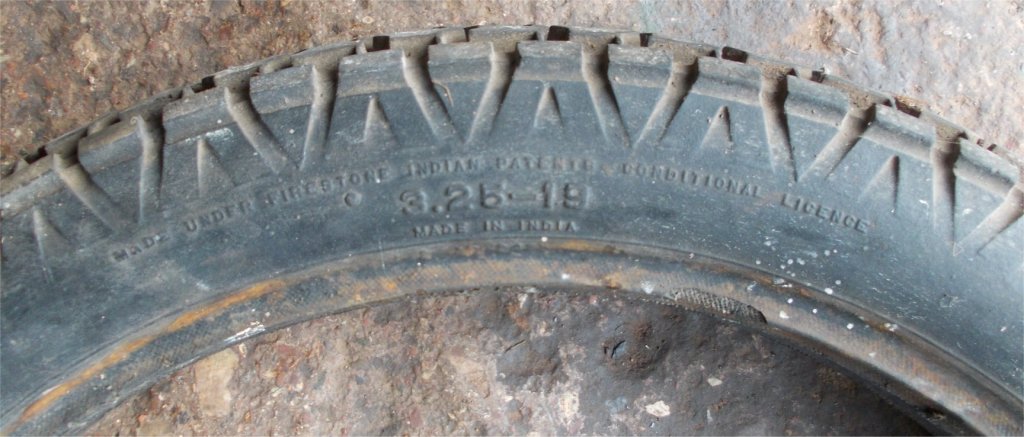
Basic specification for the WD16H refered to 19 inch wheels
(3,25 x 19 tyres), whereas for the Big4 the specification gave 18 inch wheels (4,00 x 18 tyres).
It is described by Jack Dienst (see "a civilian in uniform") that while in
Tunesia, he rebuilt 16H hubs with 18 inch (BIG4) wheel rims. This provided the
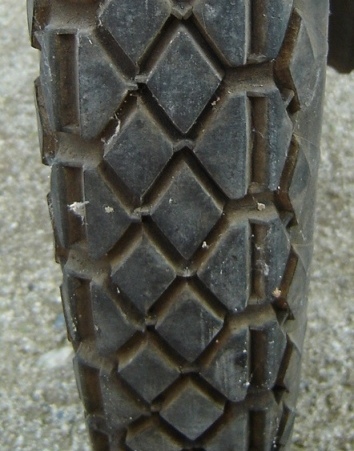
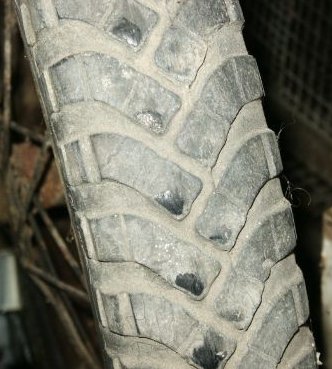
possibility to apply the trails type BIG4 tyres with more grip and leaving more room for the
mud between tyre and mudguards.
Based on a late (1944/45) spareparts list for RAF 16H sidecar combinations
were provided with 18" wheels as well. At least one 16H with 18 inch wheels surfaced in Holland in
the late 80'ties.
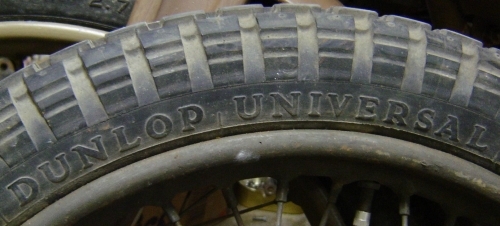
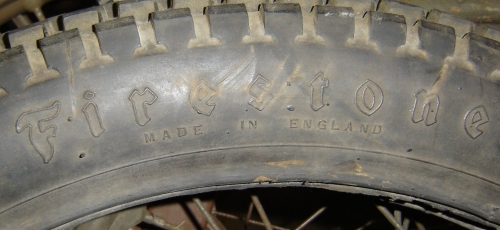
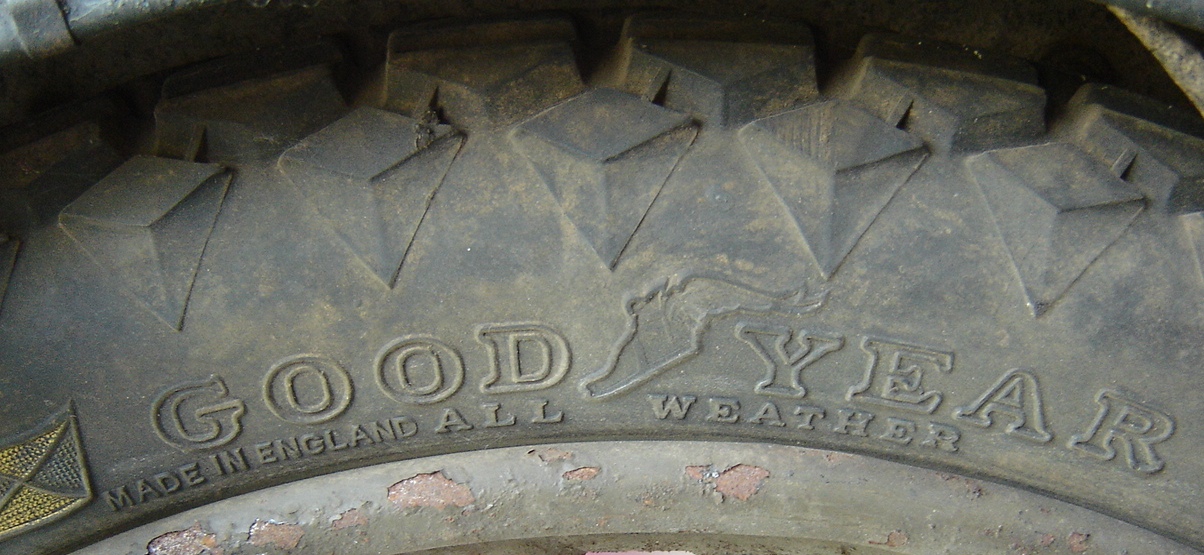
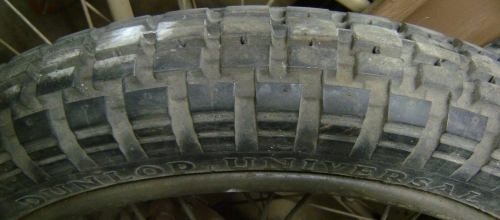
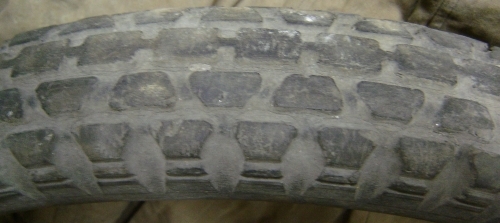
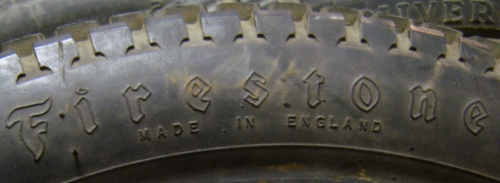
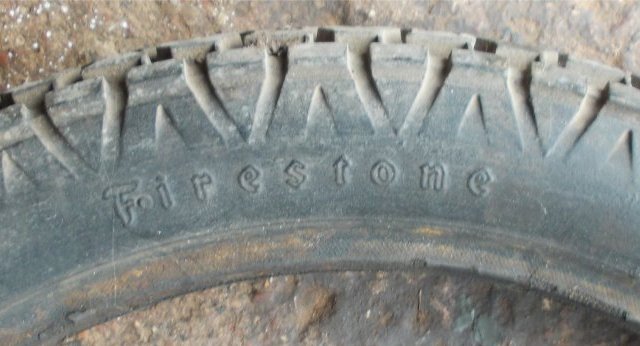
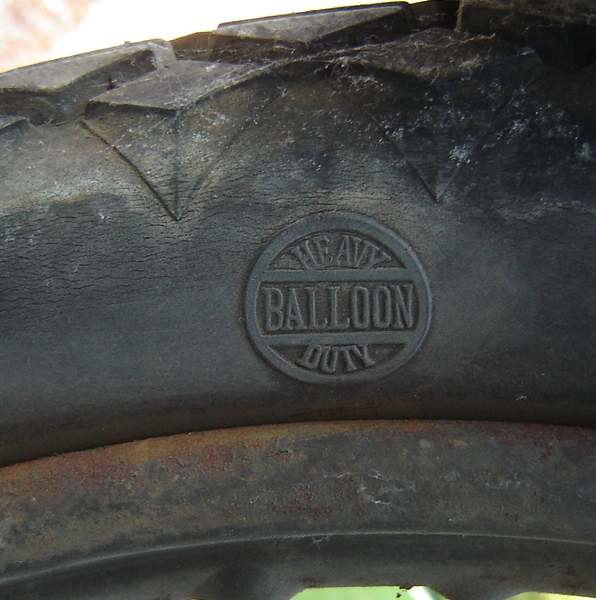
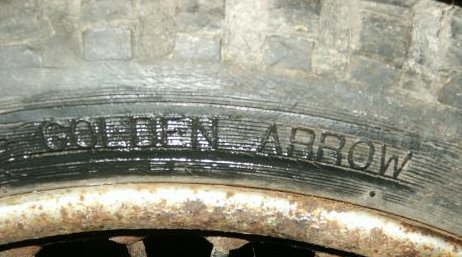
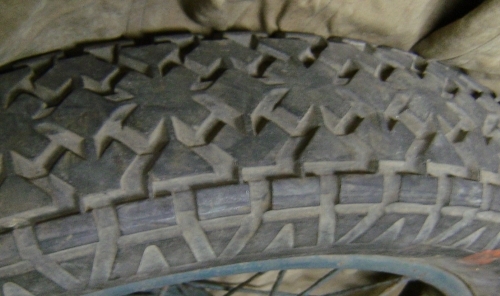
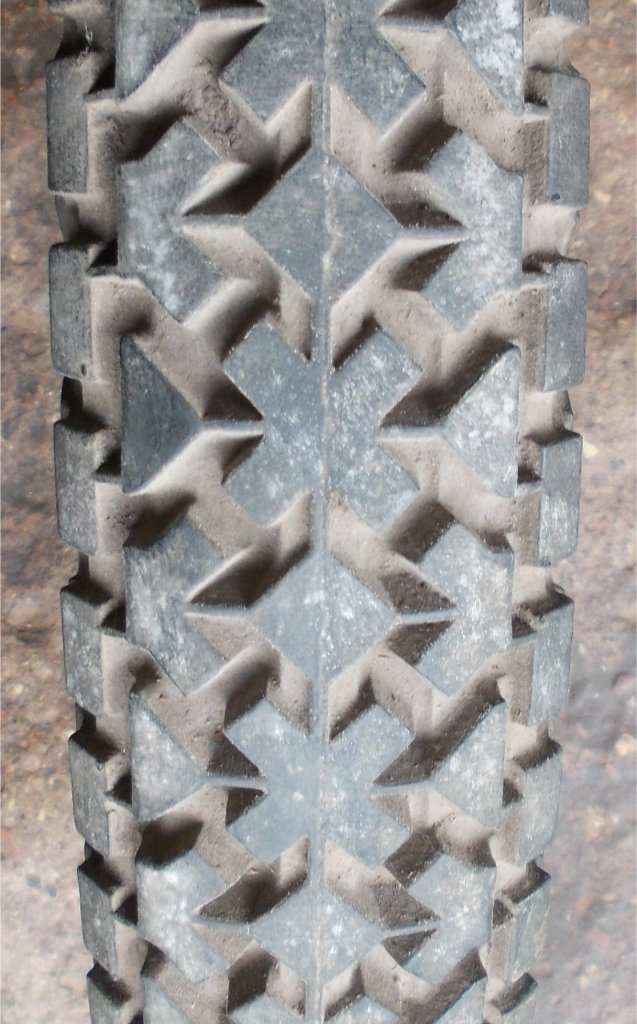
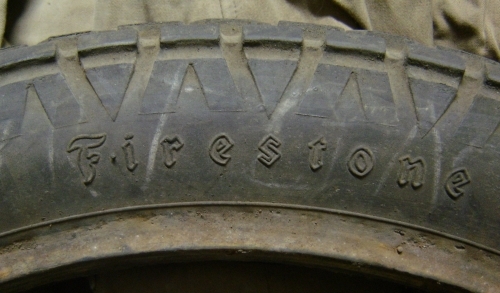
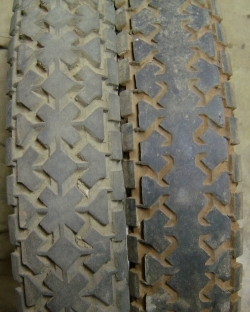
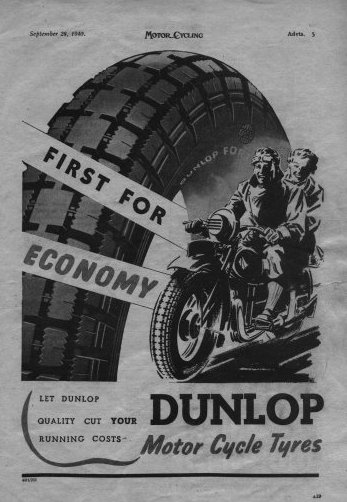
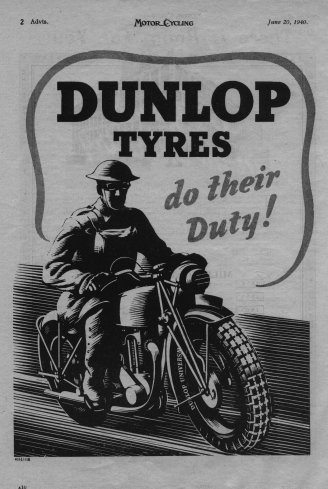
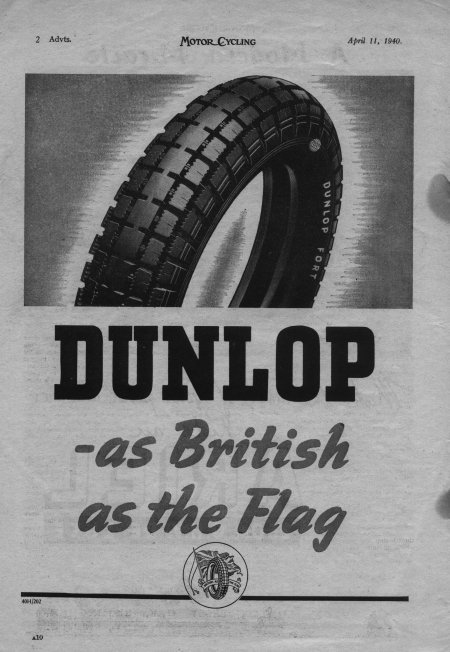
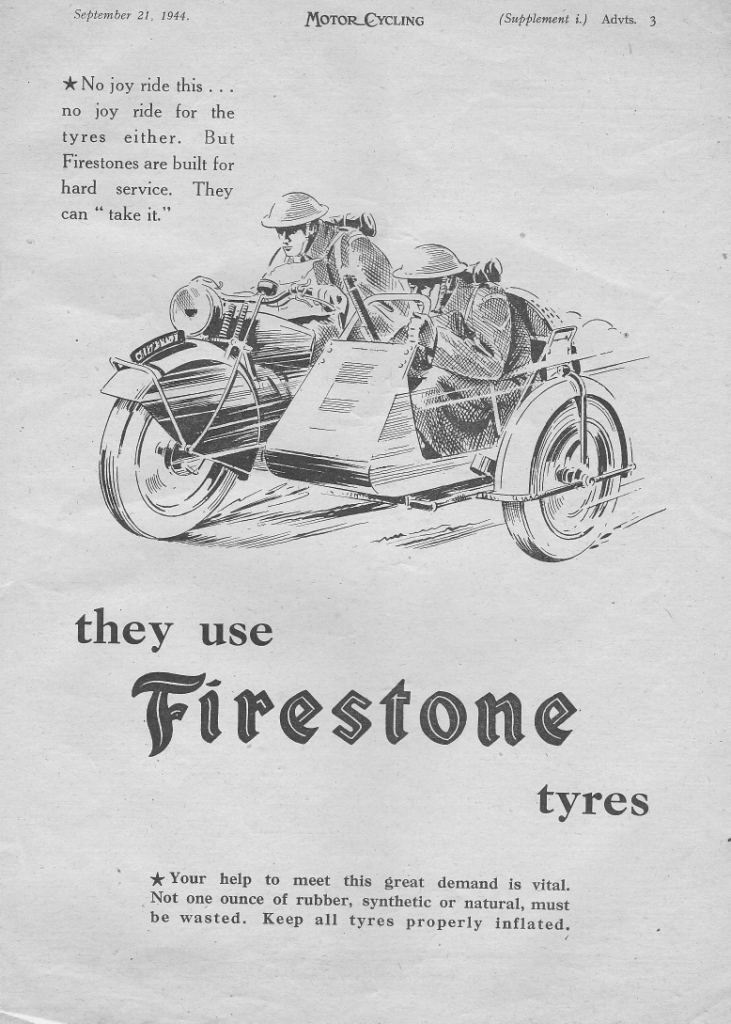
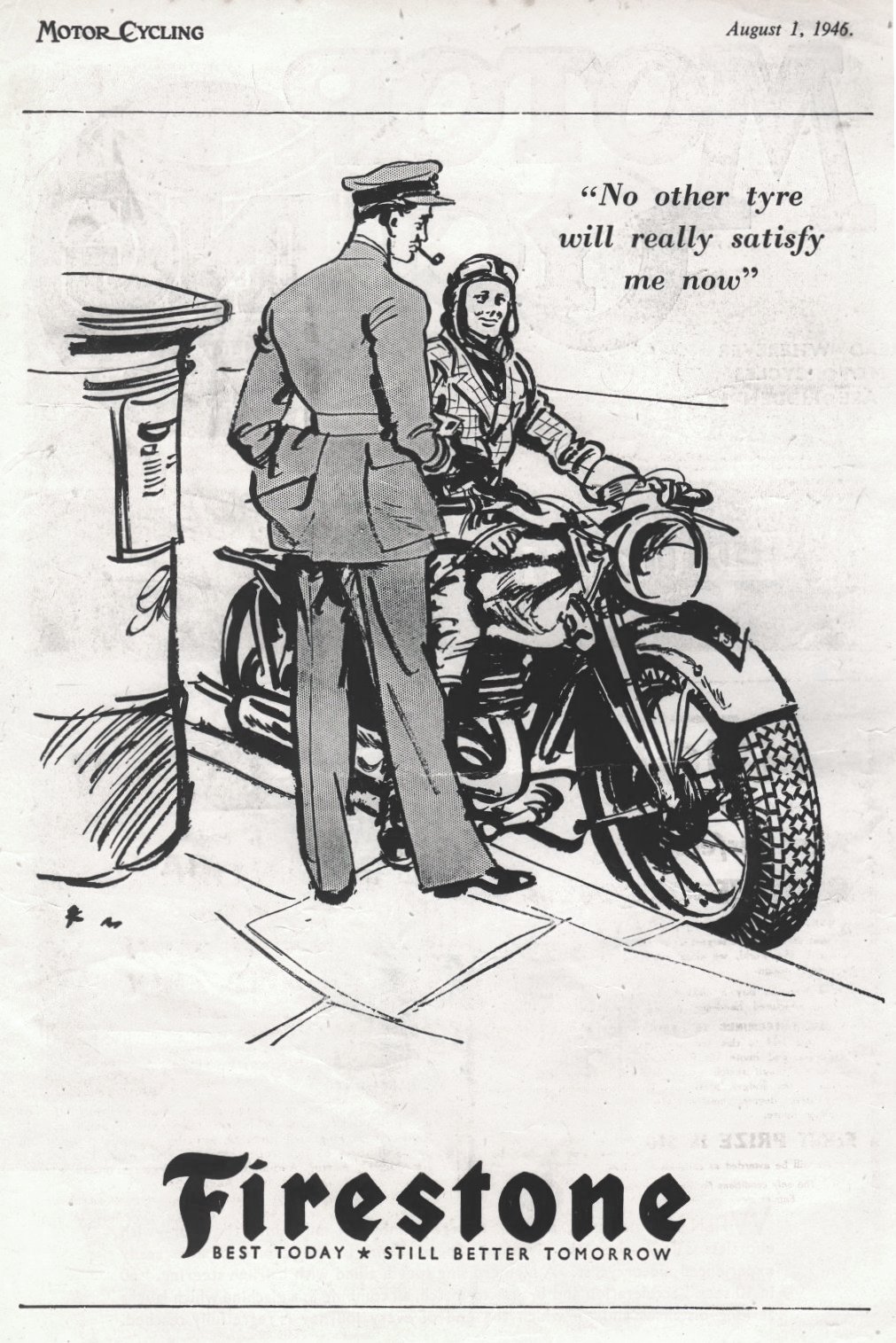
Mostly seen on pre and early wartime pictures are the Dunlop Universal,
Goodyear and Firestone tyres. The assembly books show in a number of cases
the brand of tyres for each MC by letter D, F or G for Army MC's. Air
ministry apparently only used Dunlop tyres. There are also many entries
which just state "WD tyres" both on Army and RAF MC's.
On later war pictures,
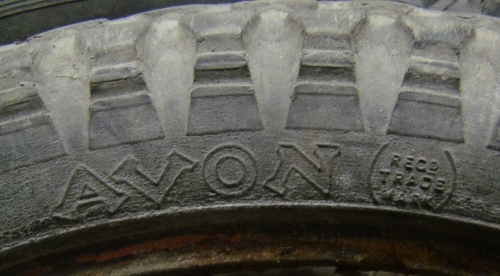
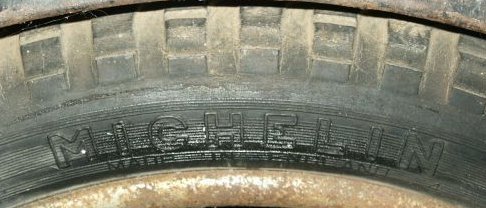
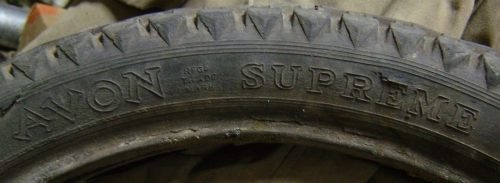
Avon tyres become visible. After the war, also Avon Supreme
and Michelin tyres were used.
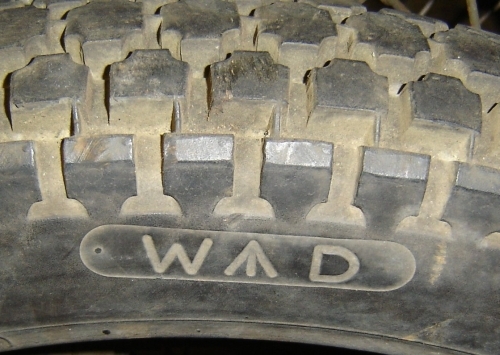
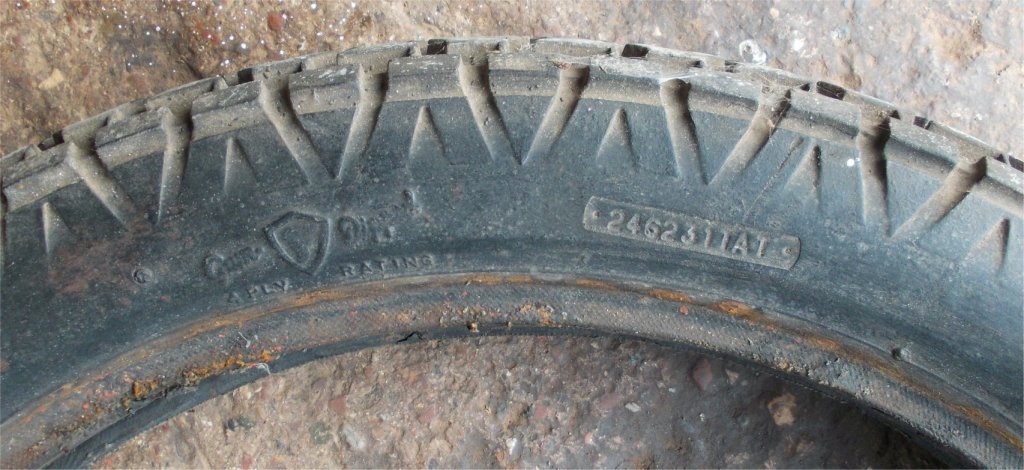
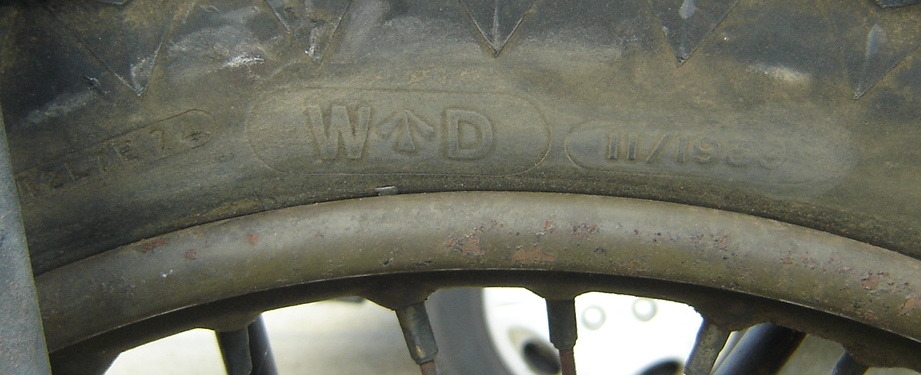
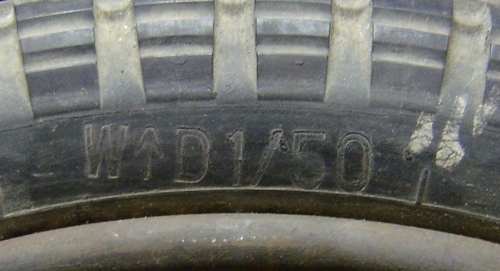
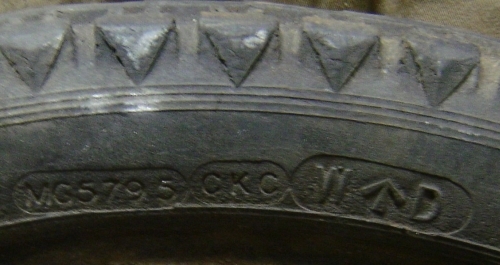
Military tyres were marked with the "broad
arrow" as can be seen on the pictures below. Sometimes even a white ink
stamping can be seen with an LV6 MT14 code (RAOC? (Royal Army Ordnance Corps)
stores code).
On some tyres, it looks like the broad arrow was not initially moulded in
the tyre but appear to be hot pressed into the tyre afterwards.
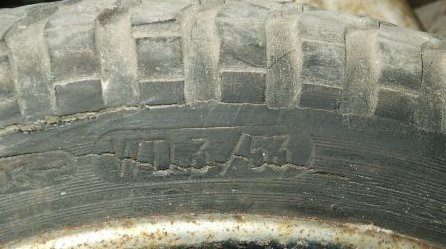
Date of manufacture is not clear in many cases.
Tyre pressures as given in military Norton Driver
manuals range from 17 to 22 lbs for the front tyre and 20 to 24 lbs for
the rear tyre. In the military
Norton Maintenance manual it states 16 lbs front and 18 lbs rear. The exact
pressures for tyres are therefore hard to give.
A postwar Dutch civil Norton maintenance manual refers to pressures of 22 lbs
front and 26 lbs rear with one person on board and 26 lbs front and 28 lbs
rear with two persons on board.
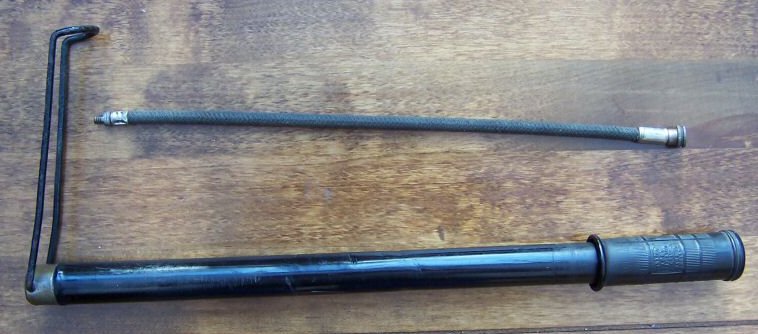
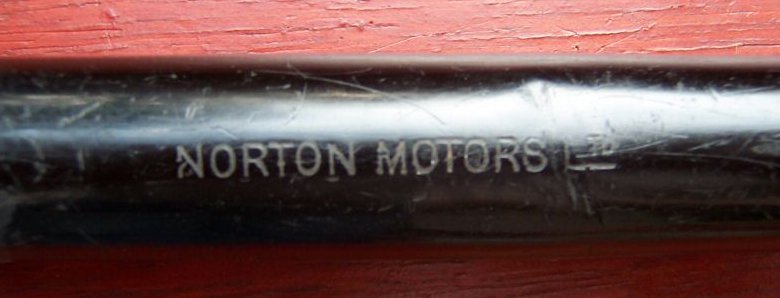
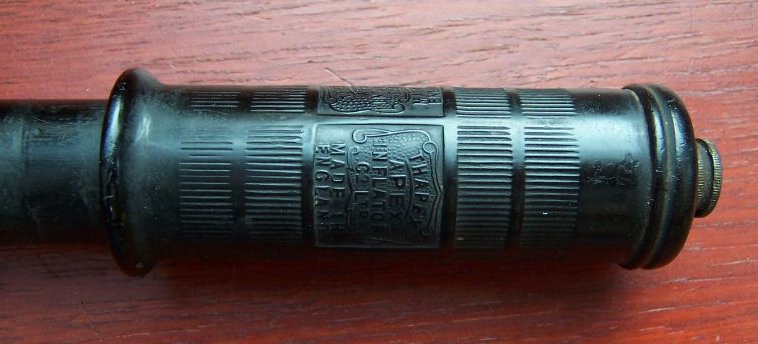
To top it off, at the bottom are some pictures of what each Norton 16H
should have, but seldom does. (Would personally be interested in obtaining one!)
|